
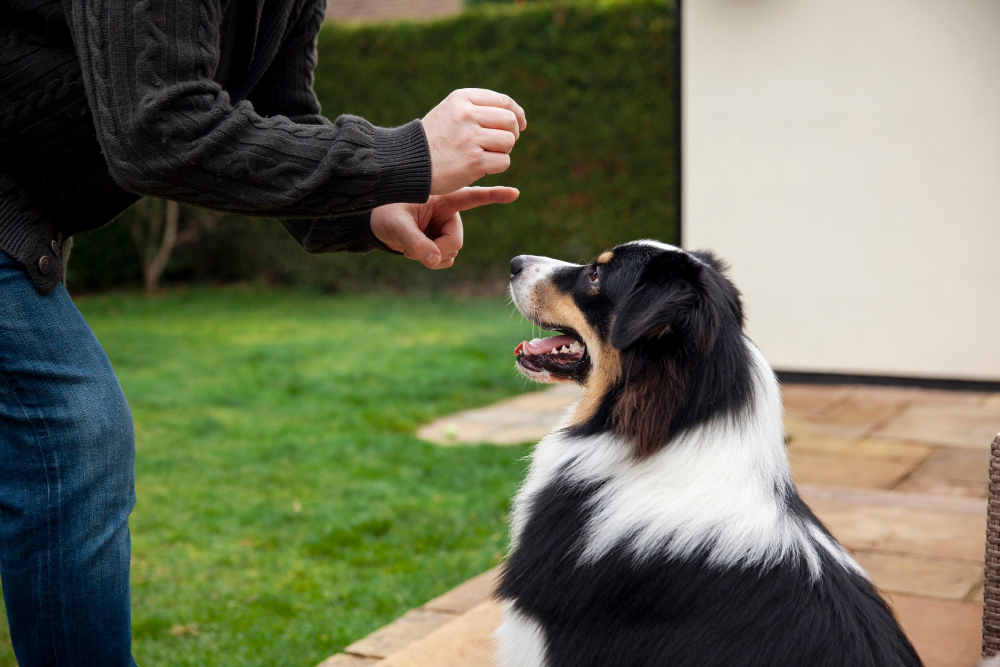
When people discover that I have spent more than a decade working with dogs and have worked with thousands of them, they often assume I have learned a great deal about canine behaviour.
They’re absolutely right.
Dogs have taught me about communication, learning, emotional regulation, relationships, body language, motivation, stress, resilience, and trust. They have taught me how behaviour develops, how it changes, and how small differences in environment and experience can have a profound impact on the way an individual responds to the world around them.
What I didn’t expect when I first started this journey was how much dogs would teach me about people.
Because while my work is often described as dog training or behaviour work, the reality is that every dog comes attached to a human being or two. Behind every barking dog, every reactive dog, every anxious dog, and every dog struggling with behaviour problems is a person trying to do their best.
After working with thousands of families, certain patterns begin to emerge. Some of those patterns relate to dogs. Many of them relate to human nature.
Most People Care More Than They Give Themselves Credit For
One of the biggest lessons I have learned is that most owners care far more than they realise.
By the time somebody contacts a behaviour specialist, they are rarely at the beginning of their journey. More often than not, they have already spent months, and sometimes years, trying to solve the problem themselves. They have read articles, watched videos, attended classes, spoken to friends, sought advice online, and often worked with previous trainers or behaviourists.
Many arrive feeling frustrated. Some arrive feeling exhausted. Others arrive carrying a great deal of guilt. Yet despite all of that, they are still trying.
Over the years I have met people who have changed their working hours, altered family routines, cancelled holidays, avoided social events, and spent significant amounts of money because they wanted to help their dog. I have met owners who have cried during consultations because they were worried about their dog’s future. I have met owners who felt embarrassed to walk their dog in public but continued showing up day after day because they refused to give up.
The image that is sometimes portrayed of dog owners as lazy, irresponsible, or unwilling to put in the work simply does not match the reality I see most days.
The vast majority care deeply, sometimes they simply need guidance.
Guilt Is One of The Most Common Emotions I Encounter
If I had to choose one emotion that appears more often than almost any other, it would probably be guilt.
Many owners assume that if their dog has developed a behaviour problem, they must have done something wrong.
They tell me they should have socialised more, trained more, exercised more, recognised the signs earlier, or handled situations differently. Some feel guilty because they work long hours. Others feel guilty because they adopted a dog without fully understanding the challenges involved. Many carry a constant feeling that they have somehow failed.
The truth is usually far more complicated.
Dogs are influenced by genetics, health, early experiences, learning history, environment, and countless other factors. Behaviour is rarely the result of a single mistake or decision.
What I have learned is that guilt rarely helps either the owner or the dog – understanding does.
When people stop asking, “Whose fault is this?” and start asking, “Why is this happening?” they often begin making real progress.
Behaviour Is Usually the Tip of The Iceberg
One of the themes I explore in my book Reactive to Regulated is the idea that behaviour often makes more sense when we understand emotional state.
The same lesson applies to people.
When a dog is barking, lunging, growling, or struggling to cope, we are seeing behaviour. What we are not always seeing are the emotions, experiences, and internal processes driving that behaviour.
People are often no different. The angry client may actually be frightened. The frustrated owner may be overwhelmed. The person who insists they have tried everything may simply be exhausted. The individual who appears defensive may be worried about being judged.
One of the most valuable lessons dogs have taught me is that behaviour is often the visible part of a much larger story. If we focus only on what is happening on the surface, we risk misunderstanding what is really going on underneath.
People Need Hope More Than They Need Information
When I first began working professionally with dogs, I assumed my role was primarily to provide information, and train dogs.
I thought that if I could explain enough concepts, deliver enough knowledge, and create the perfect training plan, everything else would naturally follow.
Over time, my perspective changed. Information is important, but many people already know far more than they think they do.
Most owners understand that consistency matters. Most understand that training takes time. Most understand that dogs require patience.
What many people struggle with is not a lack of information. It is a lack of belief that things can improve.
The moment an owner sees genuine progress, even a small amount, something shifts. Their confidence grows. Their relationship with their dog changes. They begin to look forward rather than backwards.
Hope is an incredibly powerful thing. In many cases, it is the thing that allows people to keep going when progress feels slow.
We Learn Best When We Feel Safe
Another lesson that appears repeatedly in both dogs and humans is that learning becomes much harder when stress becomes overwhelming.
A highly stressed dog struggles to process information. A highly stressed human often does too.
This is one reason I have become increasingly interested in emotional regulation, both in dogs and in the people who care for them. Learning is not simply about information. It is about creating the conditions in which learning becomes possible.
People learn more effectively when they feel understood rather than judged. Dogs learn more effectively when they feel safe rather than threatened. The principle is remarkably similar.
Whether we are talking about a reactive dog or a worried owner, progress tends to happen when pressure decreases and understanding increases.
Progress Is Almost Never Linear
One of the most unrealistic expectations people have is that improvement should happen in a straight line.
We love stories of transformation, we love before-and-after photographs, and we love dramatic success stories. TV often portrays dog training in this way.
Real life is usually messier. Dogs improve, then have a setback. Owners gain confidence, then experience doubt. A breakthrough is followed by a difficult week.
This is not failure. It is simply how progress often looks.
The owners who achieve the greatest long-term success are rarely the ones who experience no difficulties. More often, they are the people who accept that setbacks are part of the process and continue moving forward regardless.
Resilience matters far more than perfection.
Relationships Matter More Than Techniques
The dog training industry spends a great deal of time discussing methods.
People debate reinforcement, corrections, leadership, management, food rewards, equipment, and training systems. These discussions have value, and methods certainly matter.
However, after working with more than 1,000 dogs, I have become increasingly convinced that the quality of the relationship between the dog and the owner matters more than any individual technique.
Dogs are remarkably adaptable. They do not require perfect owners or flawless training plans.
What they need is consistency, communication, patience, and trust. When those foundations are present, many other pieces begin to fall into place.
The strongest transformations I have witnessed have often occurred not because somebody discovered a magical technique, but because they developed a better understanding of the dog standing in front of them.
Dogs Often Bring Out the Best in People
Perhaps the most surprising lesson of all is that dogs have an extraordinary ability to help people grow.
I have seen people become more patient because of a difficult dog. I have seen people become more resilient because of the challenges they faced together. I have seen people become more empathetic, more observant, more emotionally aware, and more understanding.
Not because somebody taught them those qualities directly, but because a dog required them.
The relationship between humans and dogs is often described in terms of what we teach our dogs. We teach them how to live in our homes, how to navigate our world, and how to behave appropriately within it.
Yet after more than a decade working with dogs, I sometimes think the relationship works both ways.
Dogs teach us patience. They teach us consistency. They teach us forgiveness. They teach us to focus on what matters.
And perhaps most importantly, they remind us that progress is not about perfection. It is about showing up, day after day, and continuing to move forward together.
For all the things I have learned about dogs over the years, the greatest lesson may simply be this:
People are often far kinder, more resilient, and more capable than they give themselves credit for.
Sometimes it just takes a dog to help them discover it.