
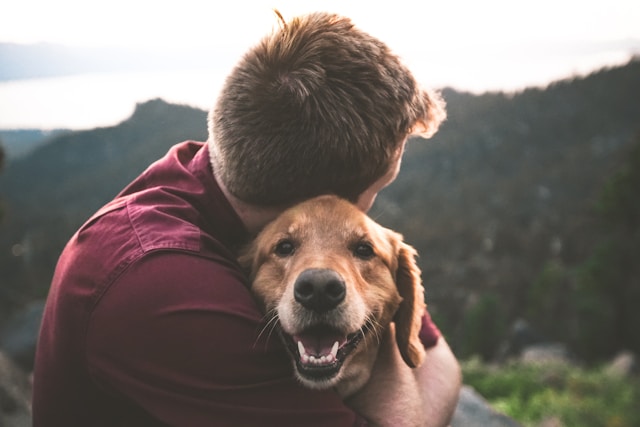
There are very few words in dog training that generate as much disagreement as the word leadership.
Mention it at a seminar, on social media, or in a conversation between trainers and you will often receive completely different reactions. Some people immediately think of guidance, trust and responsibility. Others hear the word and picture dominance, intimidation and outdated ideas about “being the alpha.”
Some trainers avoid the word altogether. Others use it constantly. Many owners simply become confused.
Over the years, I have come to realise that the problem is not really the word itself. The problem is that we have all quietly developed different definitions of what leadership means.
That matters because words shape the way we think. If two people are using the same word to describe completely different ideas, they will inevitably end up arguing with one another. One person may be defending guidance and responsibility, while the other is rejecting force and intimidation. They are not actually discussing the same thing, even though they both believe they are talking about leadership.
Personally, I think that is a shame. Not because I think every trainer should use the word, but because I believe an important idea has become buried beneath years of misunderstanding.
The Pendulum Swung
Like many subjects, dog training evolves. Ideas are challenged. Research develops. Better evidence becomes available. Sometimes we discover that things we once believed were incomplete or simply wrong. That is exactly how science should work.
There was a time when much of dog training was heavily influenced by theories surrounding dominance and social hierarchy. Owners were encouraged to establish themselves as the “alpha” by winning confrontations, physically correcting unwanted behaviour, or trying to prove that they were somehow above their dog in a family hierarchy.
Looking back, it is understandable why many of those ideas have been criticised. Our understanding of wolves has improved considerably since many of those theories first became popular, and our understanding of domestic dogs has developed alongside it. Dogs are not simply wolves living in our homes, and relationships between dogs are far more flexible and nuanced than many early explanations suggested.
As the science changed, however, something else happened: the pendulum swung.
Instead of simply rejecting outdated ideas about dominance, many people rejected the idea of leadership altogether. Somewhere along the way, the two concepts became merged into one, as though rejecting one required abandoning the other.
I have never believed that. In fact, I think leadership and dominance are almost opposites.
One is about power. The other is about responsibility.
The Parenting Analogy
When I wrote Reactive to Regulated, I found myself returning repeatedly to the idea that good dog ownership often has far more in common with good parenting than it does with controlling another animal.
That comparison still feels right to me today. Think about the best parents you have known. Perhaps they were your own parents. Perhaps they were somebody else’s. Perhaps they were a teacher, a grandparent or another adult who had a positive influence on your life.
Chances are they did not spend every day reminding children who was in charge, nor did they did not look for opportunities to win arguments, and they did not mistake fear for respect.
Instead, they created clarity, established routines, set boundaries, and they explained expectations.
When mistakes happened, they responded consistently rather than emotionally.
Most importantly, they gradually helped children develop the ability to make good decisions for themselves.
Surely that is what we should want for our dogs as well. The goal is not lifelong dependence, and the goal is not unquestioning obedience. The goal is not to create a dog that simply waits to be told what to do every few seconds.
Surely the real goal is to raise a dog that is increasingly capable of making good decisions because we have spent time teaching them how. That has always felt much closer to leadership than domination.
Leadership Is Often Quiet
One of the most interesting things I have noticed over the years is that the owners I admire most rarely look particularly impressive from the outside.
They are not constantly issuing commands, repeatedly reminding the dog who is in charge, and are not trying to control every movement their dog makes.
If anything, they often appear to be doing less. An in doing this their dogs seem settled, and they move through the world together with very little drama.
When together communication is quiet, decisions are predictable, and both owner and dog seem to understand one another.
It reminds me of watching an experienced teacher in a classroom. Good teachers rarely need to raise their voice.
Not because they are naturally intimidating, but because they have created an environment where expectations are understood. The classroom feels calm because the teacher feels calm. The pupils know where they stand, and that predictability allows everyone to concentrate on learning.
Dogs are no different. When life becomes predictable, many dogs relax. When expectations are consistent, many dogs become more confident. When owners become calmer, dogs often follow.
I do not think that is dominance. I think that is leadership.
Leadership Is About Responsibility
Perhaps this is where I differ from both sides of the debate.
I do not believe leadership is about being in charge, I believe it is about accepting responsibility.
- If my dog is frightened, it is my responsibility to help them feel safe
- If they are overwhelmed, it is my responsibility to recognise it
- If they need guidance, it is my responsibility to provide it
- If they need boundaries, it is my responsibility to set them fairly and consistently
That does not make me more important than the dog. It simply acknowledges that I am the one with the greater understanding of the world we are asking them to live in.
- Dogs do not choose to understand traffic
- They do not choose to understand veterinary treatment
- They do not understand why they cannot chase every squirrel, greet every dog or eat everything they find on the pavement
Those decisions fall to us. That is not power – that is responsibility.
The Missing Ingredient
The more dogs I have worked with, the less I have become interested in whether owners describe themselves as leaders. Instead, I find myself watching something else:
- How do they make their dog feel?
- Are they predictable?
- Are they fair?
- Are they emotionally consistent?
- Can the dog trust them?
- Do they create calm or confusion?
Those questions tell me far more about the relationship than any label ever could.
Perhaps this is one of the reasons my own thinking has gradually shifted towards emotional state over the years.
The dogs that appeared to have the strongest relationships with their owners were not necessarily the most obedient.
Nor were they the dogs with the most impressive training. They were often the dogs that seemed most secure, trusted the person beside them, recovered more quickly from challenges, and they looked to their owner for information rather than acting in panic.
In many ways, those owners had become exactly what good parents become for children – a safe place.
Not because they controlled everything. But because they provided stability when the world became uncertain.
Does The Word Even Matter?
Sometimes I wonder whether we have spent so long arguing about the word leadership that we have forgotten to discuss the qualities it was supposed to describe.
If somebody dislikes the word, that is perfectly fine:
- Use guidance
- Use partnership
- Use relationship
- Use mentorship
The label itself matters very little to me.
What matters is whether our dogs experience us as calm, consistent, predictable and trustworthy. Those qualities will always matter, regardless of what we choose to call them.
Final Thoughts
I suspect the debate surrounding leadership will continue for many years.
There will always be people who associate the word with outdated ideas, just as there will always be people who use it to describe something far more thoughtful.
Personally, I have become less interested in the terminology and more interested in the outcome.
- If our dogs feel safer because of our presence…
- If they become calmer because our behaviour is predictable…
- If they learn more effectively because we provide clarity rather than confusion…
- If they develop confidence because we gradually teach them how to navigate the world…
…then I believe we are fulfilling one of the most important responsibilities of dog ownership.
Call it leadership if you wish. Call it guidance if you prefer.
The dog will never care what we call it. They will only ever experience what it feels like to live with us. And perhaps that is the only definition that really matters.